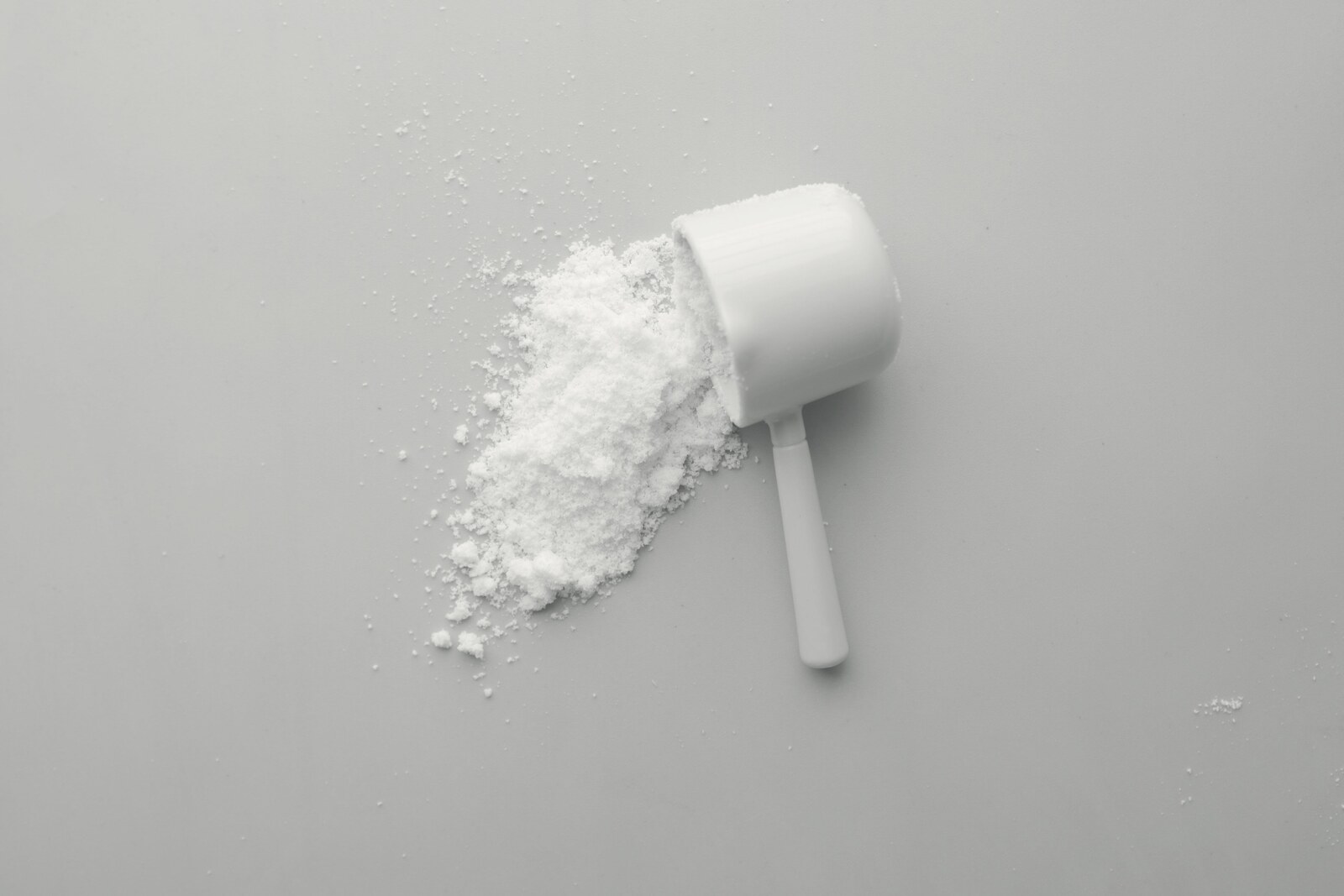
What Is Creatine?
Creatine is a compound produced naturally by the body, mainly in the liver and kidneys, and stored largely in skeletal muscle. It's also found in foods like red meat and fish, though usually not in the quantities needed to noticeably affect performance. Its main role is helping regenerate ATP, the molecule muscles use for quick bursts of energy, which is why it's most relevant to short, high-intensity efforts rather than long, steady-state work.
Supplementing with creatine, typically as creatine monohydrate, increases the amount stored in muscle beyond what diet alone usually provides. With more available, muscles can sustain high-intensity effort for slightly longer and recover faster between sets or reps, which is why it's one of the most researched and consistently effective supplements in sports science.
A well-built approach treats creatine the way it should be treated: a small, evidence-backed addition that supports the training already being done, not a replacement for a properly programmed strength and conditioning plan.
Why Is It Important?
Strength and conditioning work, particularly heavy lifting, sprinting, and repeated high-intensity efforts, relies heavily on the same energy system creatine supports. Athletes with better ATP regeneration can typically produce more force across a session: an extra rep at a given weight, a faster repeated sprint, a shorter recovery gap between efforts.
Over a full training block, that small per-session edge compounds. More reps at a given load, sustained over weeks, tends to translate into greater strength and power gains than the same programme without it. Creatine has also been studied for its role in supporting recovery and reducing muscle damage after intense training, which matters for anyone trying to train consistently across a demanding season rather than just in isolated sessions.
It's worth being clear about what creatine isn't. It won't fix a poorly structured programme, and its effect is modest, not transformative, on top of good training. Its value shows up specifically in the kind of explosive, repeated-effort work that strength and conditioning is built around.
Who Is It For?
Creatine isn't reserved for bodybuilders or powerlifters, though it's well studied in both groups. It's relevant to any athlete whose sport or training involves short, high-intensity effort, which covers most of strength and conditioning work regardless of the sport it's supporting.
For golfers and tennis players, that means more power through explosive movements like the swing or serve. For runners, it can support the sprint and interval work that builds speed, even though it offers less benefit for pure endurance efforts. For swimmers, it supports the high-intensity training that underpins starts, turns, and race-pace efforts. As with any supplement, individual response varies, and anyone considering it should factor in their own health history and, ideally, a conversation with a doctor or dietitian, particularly if they have any pre-existing kidney or health conditions.
In short, creatine is for athletes whose training already includes serious strength and conditioning work, looking for a well-supported way to get more out of the effort they're already putting in.